


Flossing & Brushing with Braces.
Good oral hygiene matters at every stage of life — but during orthodontic treatment, it becomes especially important. Brackets and wires create additional surfaces for plaque to collect, and areas that were easy to clean before braces require more attention and slightly different technique. The habits you build during treatment directly affect the health of your teeth when braces come off. The baseline: brush after every meal, floss once daily, and use a fluoride rinse. Here's how to do each one properly.


Brushing with Braces
-
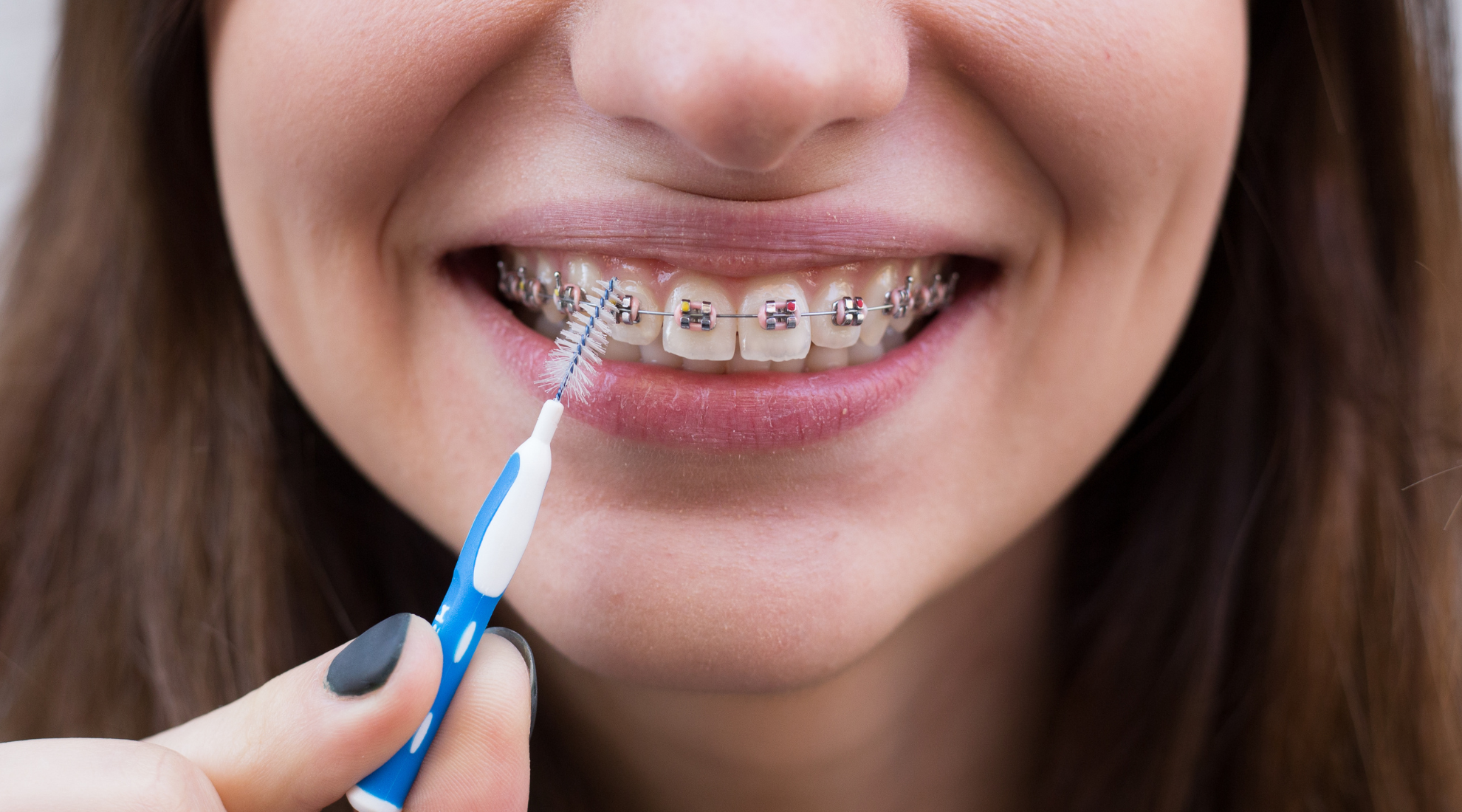
A soft-bristled toothbrush — manual or electric — and fluoride toothpaste are all you need. We generally recommend an electric toothbrush to our patients, as the oscillating head makes it easier to clean thoroughly around brackets and along the gumline. Whichever you use, technique matters more than the tool.
-
Angle the bristles toward the gumline and use small circular motions along the outside of each tooth. This cleans both the tooth surface and the bracket in one motion. Don't rush — spend at least two minutes brushing in total.
-
Tilt the brush upward to clean between the bracket and the gum, then downward to clean between the bracket and the biting edge. Food and plaque accumulate in both areas and are easy to miss with a straight horizontal stroke
-
Clean the inner surfaces of all teeth using the same circular motion, and use a back and forth motion across the chewing surfaces. Brush your tongue as well — it harbours bacteria that contribute to plaque buildup.
-
After brushing, your brackets and teeth should look clean and shiny. If they don't, brush again. It sounds simple — because it is
Flossing with Braces
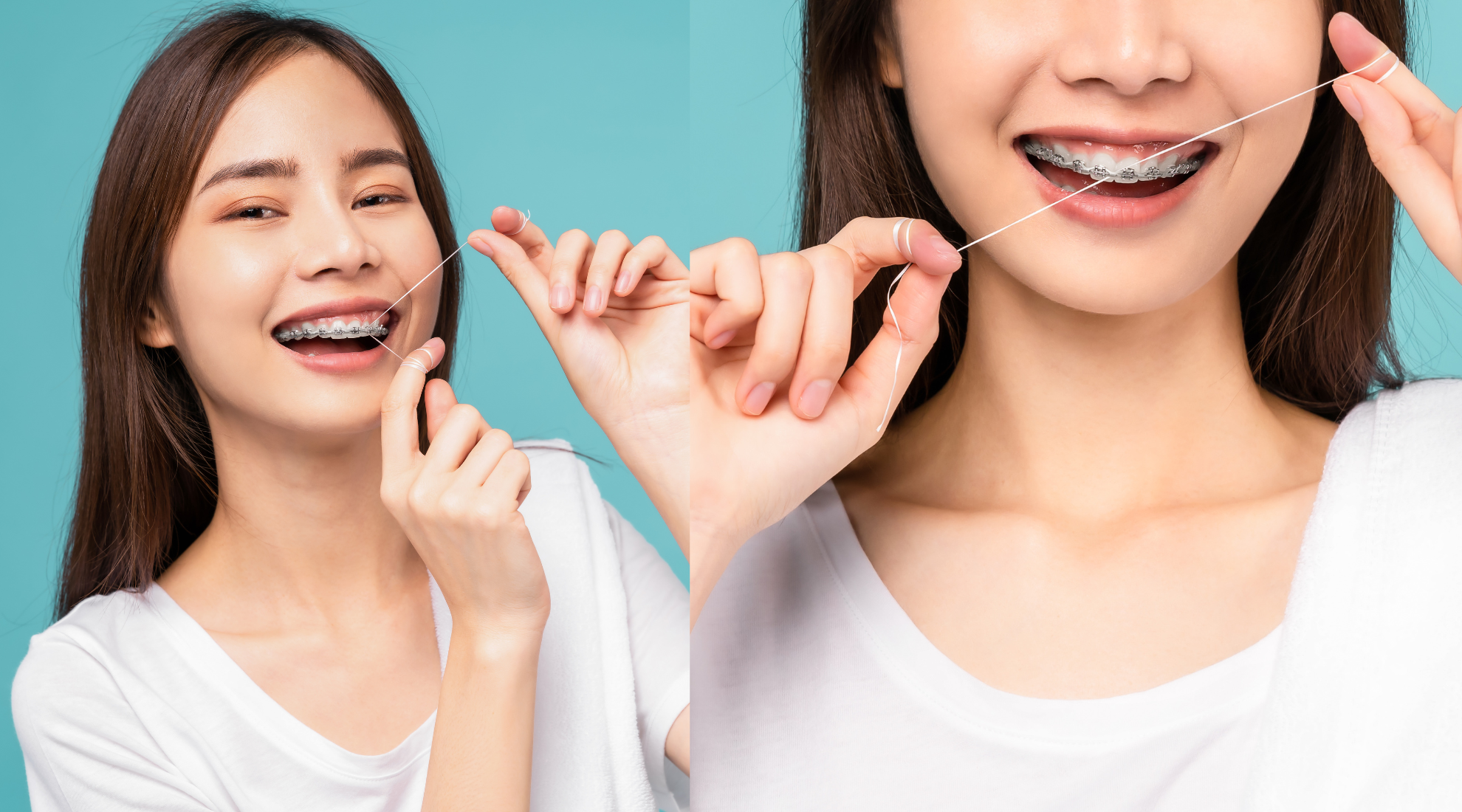
Flossing with braces takes slightly longer than without, but it's non-negotiable. Skipping it allows plaque to accumulate between the teeth and under the gumline — areas the toothbrush can't reach regardless of technique.
-
A floss threader allows you to guide regular floss under the archwire so you can floss between each pair of teeth properly. Orthodontic flossers with a built-in threader achieve the same result and tend to be quicker. Both are available at most pharmacies.
-
Once the floss is behind the wire, slide it gently up and down between the teeth and curve it under the gumline on both sides. Don't snap it — move it carefully to avoid irritating the gum tissue. Repeat between every pair of teeth, using a fresh section of floss each time.
-
A waterpick is an excellent addition to your routine — particularly for flushing food and debris from around brackets that floss doesn't reach. It works best used after brushing and flossing rather than as a replacement for either.
Fluoride Rinse

A fluoride mouth rinse used after brushing and flossing adds an additional layer of protection against decay. Braces increase the number of surfaces where plaque can accumulate, and fluoride helps prevent the white spot lesions — early signs of decalcification — that can appear on tooth surfaces after braces are removed if hygiene has been inconsistent. Rinse for 60 seconds and don't eat or drink immediately afterward.
How Often?
Brush after every meal — including lunch and any snacks. Floss once daily, ideally before bed. Use your fluoride rinse after your evening brushing routine. Continue seeing your family dentist for professional cleanings every three to four months throughout treatment.
The condition of your teeth when your braces come off is largely determined by how consistently you maintain your hygiene during treatment. The result we're working toward together depends on more than just the clinical work; your daily routine is part of it.